


Cable design and crossing study
A draft cable design and crossing study, with worksheets for the calculations HVCO supports.
e.g. a draft study for a sample route lists its crossings and calculations.
HVCO
HVCO drafts the study for UK grid connections from 11 kV to 132 kV. Every value shows its source and date, so you check a finished draft instead of starting from blank.

A draft cable design and crossing study, with worksheets for the calculations HVCO supports.
e.g. a draft study for a sample route lists its crossings and calculations.

Routes compared on the checks you declare and on cost; the cheapest option that passes is flagged.
e.g. four route options compared; the cheapest option that passes the checks is flagged.

Cross-sections and 3D views of the trench, from the dimensions you record.
e.g. a cross-section shows two circuits in one trench, labelled with your dimensions.

Proposes the network area from your route’s first point, using approximate NESO boundaries. You confirm it, and the source is shown.
e.g. a route starting in the north of England gets a network area to confirm.
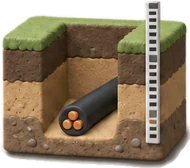
Cable cover checked against minimums taken from operator documents, where the land use and voltage are recorded.
e.g. a cable under a verge is checked against a minimum cover figure.

Design current, voltage drop, losses and short-circuit checks, with the inputs and the working shown.
e.g. a 400 m circuit is checked for voltage drop and losses.

A draft pack: cable, cut, drum and joint schedules, with a pulling plan and traffic proposal for review.
e.g. a pack lists each cable cut and drum, with a pulling plan for review.

A commissioning checklist, as-built records and a handover pack, compared with a tolerance you set.
e.g. installed length is compared with design, using the tolerance you set.
Connection programmes are tight, and when an offer changes the point of connection the route work starts again. The desk study behind a cable route still takes a long time by hand: gathering the site information, comparing the routes, drawing the trench and writing it all up. HVCO prepares that first version, so your engineer starts from a draft instead of a blank page.
Where a value came from, and its date, is shown beside it. A missing value is marked unknown for your review, not filled in silently.
Cover minimums come from the network operator’s published documents, where the land use and voltage are recorded.
Your engineer accepts, changes or rejects each value before anything is issued.
Give HVCO the site and the route options you are studying.
HVCO proposes the values and drawings, with the source beside each one.
Your engineer accepts or changes each value, then issues the report.
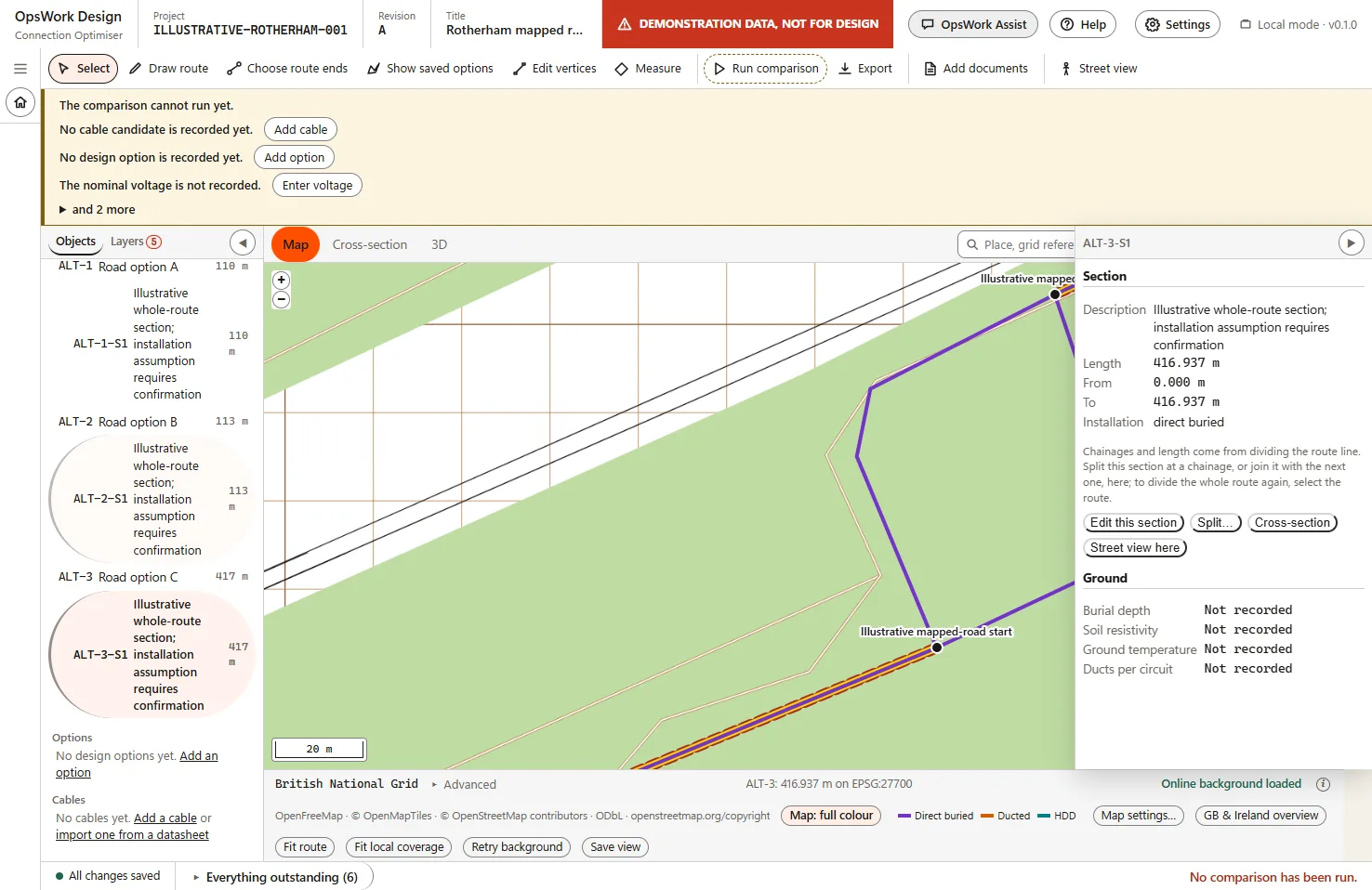
You need
Good to know
30 days free, then £395 per user per month, or £3,950 per user per year, two months free. Excluding VAT. See pricing ↗
Engineering decisions stay with your engineer. Illustrative examples use invented addresses.
We use necessary cookies to run the site and keep it secure, and count visits anonymously with no cookies. Statistics and advertising cookies are used only if you say yes. Nothing optional is set until you choose. Cookie notice